
Multihyphened
Don’t worry, it’s mostly painless

Dear Reader,
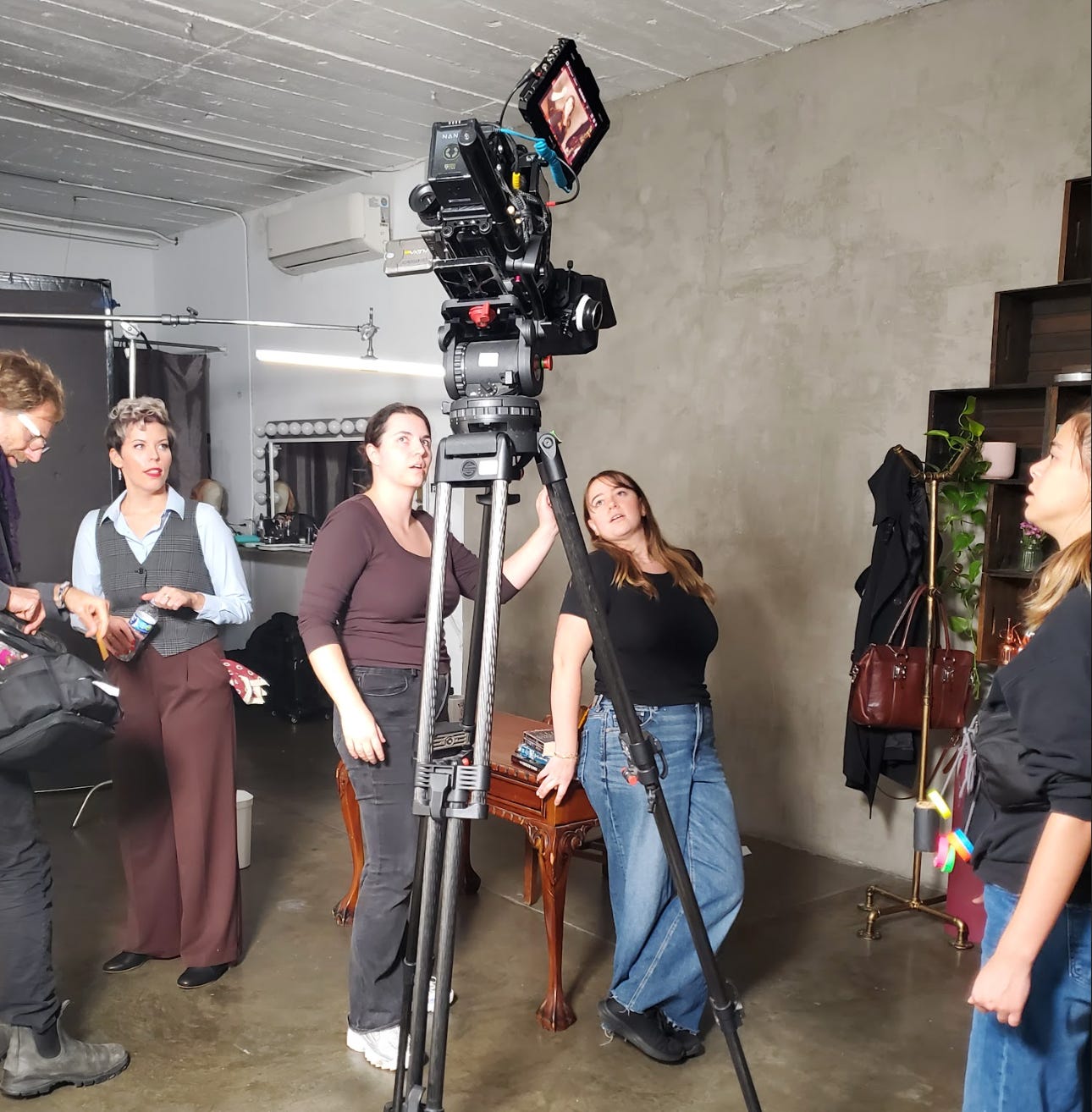
I write to you having officially starred in my first short film: “The Hormone Games.” (The first version of this monologue was released in on February 1st, 2025)
“How?” you might ask. “What was the casting process?” you might venture. Well, I wrote it, produced it, and directed it, so I cast myself
For those of you in the industry, you know how much work this entails. There’s a reason there are so few Actor/Directors; it helps to have someone outside of the character watching the performance at the monitors, providing feedback, and casting a vision for the project.
It is also vitally important to cast the right actress for the role. However, I knew exactly what I was looking for in this part. I knew the voice because she is the direct, mildly unhinged, and razor-sharp sense of humor (and rage) that goes off in my mind frequently. Rarely do I let her out to play for the public, but this … this was my moment.
This is also my tenth directed and produced project, and I have not acted in any of the others because I believe that if you don’t know what you’re doing as a director or an actor, and you take on both roles, the project will suffer. However, after directing nine short films and over a year of acting school, I felt confident I could carry the role and the directing of this project if I brought on board the right collaborators to support me.
Making it in this industry is certainly a matter of working hard and knowing when to work for free and support the creatives around you. However, it’s also a matter of being a self-starter; being bold, believing in your own projects, and betting on your own creative voice. Thus far, I’ve done this with my storytelling and used it to serve as many creatives as possible around me with the opportunity to hone their gifts. In this industry (and I believe in everyone’s life), you must know when it’s time to choose yourself and bet it all on black.
Choosing to star in my own project, I will admit candidly, between you and me, was terrifying. There were many times in the months leading up, where I asked myself, “What are you doing?! Are you sure you want to do this???” It felt a little bit like going out on a tight wire several hundred feet above the ground, on a unicycle, while juggling fire.
But again and again, the question came down to this: did I believe in the project? Did I want the message out there? It’s early days in my acting journey, but I believe that if the actor’s goal is to feed his or her own vanity with their work, they will ultimately fail. The best work, the best acting, comes from actors who surrender themselves to the project. Their entire goal and purpose is to serve the role they’ve been cast in. So, I set aside my own self-doubts and stage fright as I stepped out into this new territory and set my sights on fully serving this story as a Writer, Producer, Director, and Actress.
Allow me to take you on the journey of what that was like.
WRITING:
“The Hormone Games” is a story I’ve wanted to tell for seven years. I got the idea when I was counseling middle and high school girls. I remembered what it was like to be strapped into the gut-plunging rollercoaster of hormones, which every female must ride every twenty-eight days. I remember feeling confused, terrified, alone, and helpless. I’m not being dramatic, just honest. The older I got, the more I learned the science of what is happening in female bodies, and how I personally responded to the chemical waves dropping like bombs in my own body, the more I developed strategies, systems, and grace for myself to navigate the ebbs and flows. I desperately wanted to share these insights not just with my group of girls, but, frankly, the world. Yet how to do this…
Once I started acting classes, I realized, in a blaze a female-writer-fire, that this piece, “The Hormone Games,” was a monologue. One of the most important lessons I have learned from the Beverly Hills Playhouse is the importance of having a strong point of view. Thus, I leaned into her perspective.
The whole point of this piece is to describe in vivid detail, without apology, the scientific truth of what it means to be made female, and to share one example of the emotional and psychological effects of what that means for this woman. In the specific, we shall find the universal; when we share our specific experiences, other people feel seen and less alone. This is a topic most of us (male and female) are not willing to candidly discuss, and yet, like gravity, it is a pull, an undeniable force on our society. So, I wanted to talk about it! Give some tips, tricks, and navigational information for both genders.
Besides, when I’m scared to write something, that’s when I know I’ve got to write it. Thus, I began the writing process.
Typically, when I write something, it requires a few days of focused effort and attention. This particular project required scientific research on the menstrual cycle. I learned about the four different seasons, and then, without meaning to, I wrote about each phase as I experienced it. Readers, I promise you: I did not do this on purpose. I track my cycle with a couple of different apps, and these apps provide information about what I may experience physically, mentally, and emotionally. They give advice on what to eat, when to stay home and be gentle with yourself, when to go out, socialize, and shine.
While writing, giving full creative voice to this character, there were moments I wondered if I was being overly dramatic. Exaggerating for sake of spectacle. I would decide to delete a particularly effusive section … and then realize I had experienced that very same thing for the last three days. I wasn’t dramatizing; I was reporting. This was eye-opening because it made me realize I have always minimized my experience of the cycle in order to “get along” and maintain a steady normalcy. Granted, in some ways, this is a necessary coping mechanism. It is also personal gaslighting. I realized, through studying, observing firsthand experiences, and recording a persona explaining these things, that I manage a lot as a woman. No wonder I felt so crazy! I’ve been lying to myself about how hard I work to just manage my regular life, on top of living in a fertile human female body.
I am not raging; I am just identifying reality. I am grateful to be female. I love being a woman. And I also think being female should come with some sort of manual. Something to provide information and guidance, so we can be kinder to ourselves, and also offer men more information, enabling them to love and support us through it. (The experience of men in my life, around this area, has been nothing but kindness and support, and I hope the same is true for you.)
I wrote about the first phase as I experienced it, and then tried to move on to the next while I was still in the first … I couldn’t. I tried. Truly. Something in me shut down. I was too tired, too emotionally drained, I don’t know, but I really tried. Then, a few days later, suddenly I was writing again, researching, recording, observing. Over a few days, I wrote about the experience from her point of view. Now we’re cooking! I finished the second section and moved on to the third … and again I shut down. Creative juices stopped flowing. My brain became foggy and lethargic. I don’t know if it was because I was writing about it and my body was more aware, more observant, but that particular cycle felt harder than I had experienced in many years. Then, in a few days … back to writing. I was stunned: it was as though my body, my brain, my creative subconscious self, would only allow me to write about the experience as I was experiencing it. As though some external force was restraining me in order to keep me creatively honest and “in it.”
When I figured this out, I backed off and just wrote when I knew it was time.
ACTING
Acting is a supremely different experience from writing and directing. Yes, it draws on the same skills and resources, but writing and directing are, by nature, more mental activities. You develop the story from an eagle-eye perspective, taking in the entire landscape. You observe the details with perception from several hundred feet above the ground. You put yourself in the shoes of all the characters, from all the angles. You work on how the plot points relate to each other, and control the meter on tension and conflict.
Acting, by contrast, is more physical. You step into the character, or rather, allow the character to step into your skin. You mark the emotions, bringing them to the surface for all to see. The actor must take each moment as it happens, because you are living the experience of this story from one point of view, for the sake of the audience watching you. It’s not flying over the forest; it’s walking through the woods.
The bulk of my training and experience is writing and directing, so I had to learn the long way that properly bringing a character to life takes HOURS of practice. Learning how to hold the stage, be interesting by yourself for a solid chunk of time, is no joke. Thankfully, when my acting teacher saw what I was after, he assigned me Heidi’s crisis monologue in “The Heidi Chronicles.” This was an invaluable exercise for me. The monologue is ten minutes long, which I memorized in a week. I then spent the next week honing the performance, brought it to class, and got notes. I learned that I don’t like to sit in the silences, but the silence is where the tension is. That is the unguarded moment where we bare our souls; where the audience most feels the pain of the character. I reworked it, brought it back, let the silences sit, bared my soul … success.
The “The Hormone Games” clocks in at twenty-five minutes. I memorized the first fifteen minutes in about a week, performed it in class, got notes, and then memorized the next ten minutes the following week. Over two months I performed this piece five different times. Bless my fellow acting classmates, they saw it a lot. I was concerned they were growing sick of it, but I had to make the choice: “This is my class, I pay to be here, and I’m working.” Yet repeatedly, they told me they liked watching it develop, change, and grow. From their point of view, I was getting better, and the piece was getting stronger every go around. Their experience of this piece turned into watching an actress develop material and hone her own skills. Remarkably, that in itself was a learning experience for them, since we learn as much by doing the work as by watching our peers develop.
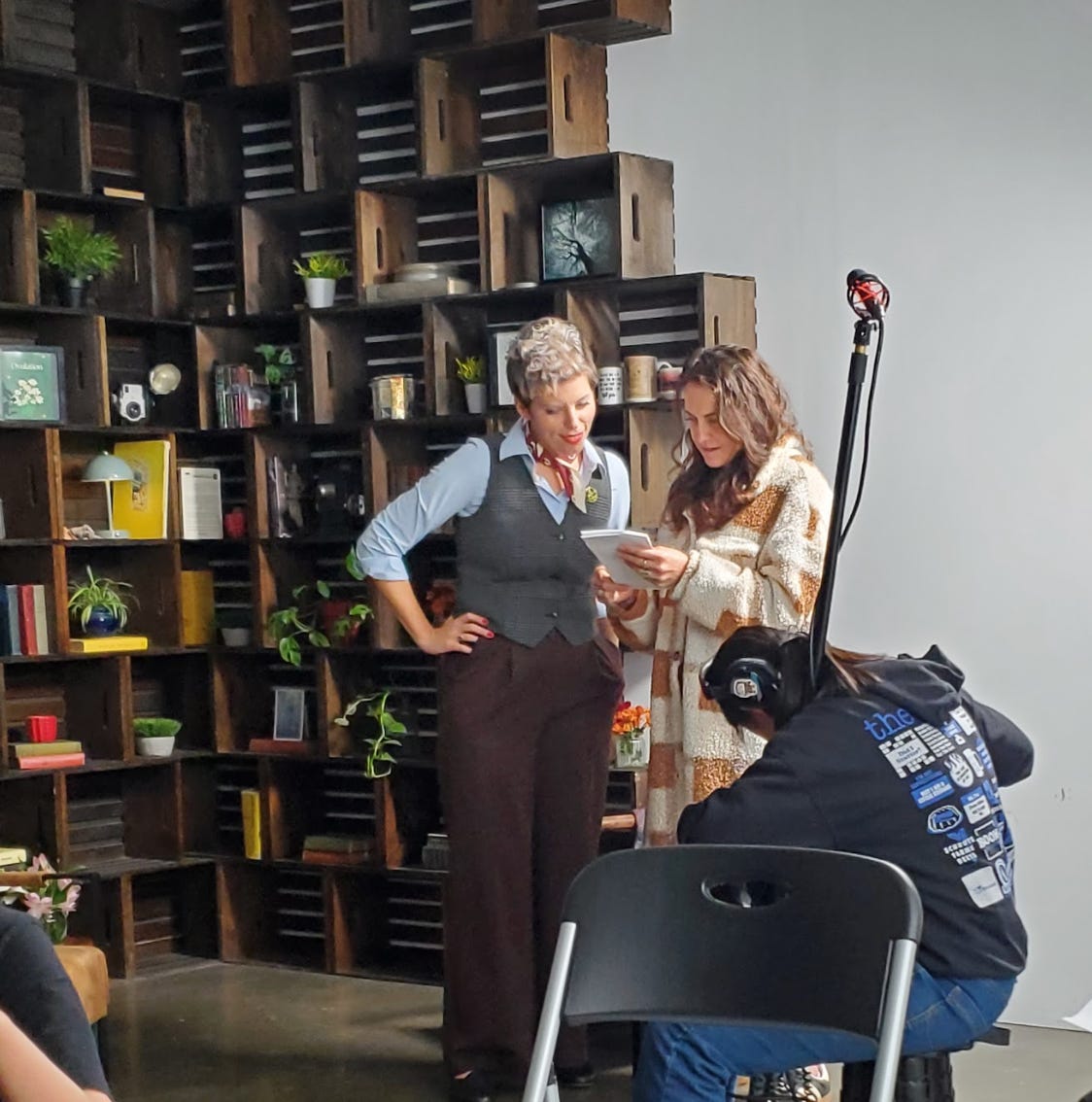
Halfway through this time, when I sensed I had taken the piece as far as I could on my own, I reached out to a friend to consult on performance for me. I had worked with Mara Weisband multiple times before. She is a gifted actress and comedian, she is diligent and dedicated to her craft, and (very importantly) she is a woman with a strong point of view. She knows how to push a character, a scene, to its limit, “go to the roof.” I am deeply grateful she said “yes” when I asked her to come on to “third-eye” it and provide direction.
We ran multiple rehearsals for a few weeks, which served to ground the material even deeper into me. Once that happens, once the material is yours, subconsciously at your fingertips, then you can really play. As I mentioned earlier, I tend to live in my mind, in the brain. My default is to show less emotion. Why? Because I believe, in many ways, stoicism is correct. We should not be owned by our emotions. Emotions are like the sea in a storm, constantly changing. I believe in the power of self-control and not allowing your emotions to rule you, because emotions are part of the animal side of ourselves, not the logical side. The least emotional person in the room tends to be the one in control, the one with the most power, the one everybody trusts in a crisis because they will not make reactive decisions, but logical ones.
However, there is a major fallacy to viewing emotions as evil, lesser, something to be overpowered and distanced from. Emotions provide valuable information. Emotions are also a key part of being fully embodied creatures. Personally, I am discovering that living into our emotions also allows us to be fully alive, not just watching our lives from our La-Z-Boys through the viewport screen of our eyes. Emotions also help others understand us and feel more connected to us. I have felt threatened by people who are out of control with their emotions; individuals who fuel the fire of their emotions and allow them to dominate them. However, I have also felt threatened and unsafe with people who have treasured stoicism above all else, not allowing other people to know what they were thinking or feeling. Emotions will have their say, but whether it be constructive and self-aware, or come out sideways with manipulation, is entirely down to the individual.
Certain professions require more of one or the other. An operator in a flight-control tower must be ruled by logic and operate in the mental, at least when people’s lives are at stake and math rules the day. However, the profession of acting requires the actor to be fully in touch with their emotional instrument; to fully live into each human moment as it unfolds and invite others into that embodied experience. Mara has a gift for the physical, and with her guidance and example, I stretched, learning how to fully embody this character, making her even crazier. Yes, the material is fun, well-written, and informational, but audiences come for the concept and stay for the character. I needed to fully embody this woman, make her even crazier, more eccentric, more out-there, so viewers couldn’t help but fall in love with her and wait to see what she would do next. My goal was to be a mirror to women everywhere:
“This is you. I see you, because this is me too. Hear us roar.”
PRODUCING
If you followed my journey through 2024, you know I had plenty of practice pulling together productions on short films and then a feature film earlier this year. Thankfully, that muscle was well-honed, and so I set to putting all the pieces into place: assembling a crew, booking a location, devising a shot list, meeting with department heads, and so on.
Making a movie, no matter the length, is a team sport. The sum of the whole is greater than the parts, and consistently, I have found that if I collaborate with people who are excellent at what they do, they bring ideas to the table that I never considered, making the project so much stronger than if I were the dictator of all. A producer’s job, in many ways, is to hire the best and get out of their way.
(Each of the collaborators below are excellent to work with, and I highly recommend them).
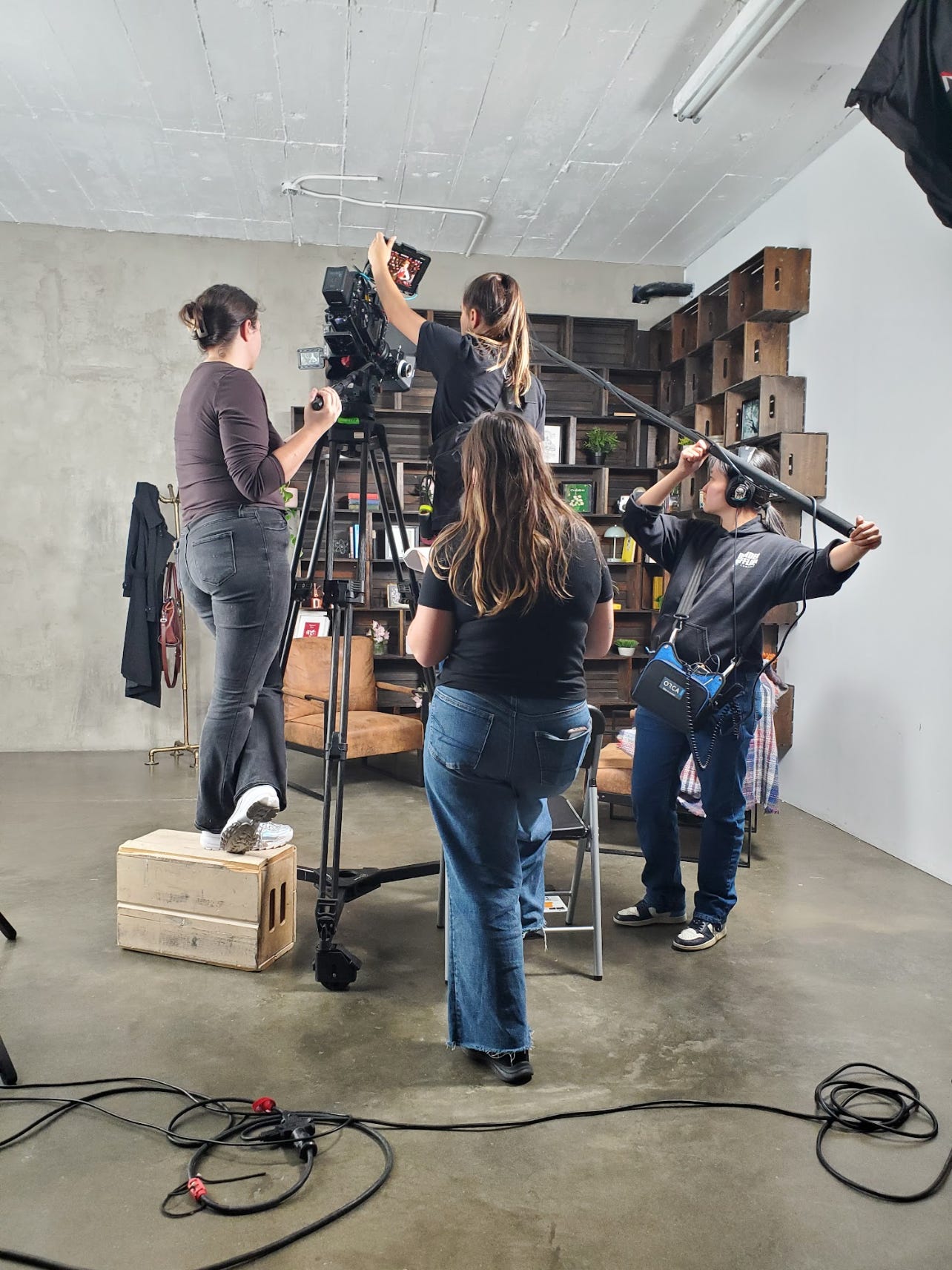
For example, when I met with my DP, Anais Bernard, she brought an entirely different perspective to the script. I reworked it endlessly from the stage, and I did have ideas for how it would shift to the screen, since you can do a lot with camera angles to keep the content interesting, but I did not have nearly as many ideas as she did. We established our basics, of course, but she repeatedly suggested angles and framing I’d never considered. Since her realm specifically the four corners of the screen, she’s thought out and tested many more possibilities than I. She also took into consideration that the subject is a single person, talking directly to the camera, for twenty-five solid minutes. While I certainly aimed to be captivating in my performance, she knows there are ways to hold attention by changing camera angles. I walked away from that three-hour meeting with her, stunned at the shot list we had created. This project just went from stage to screen.
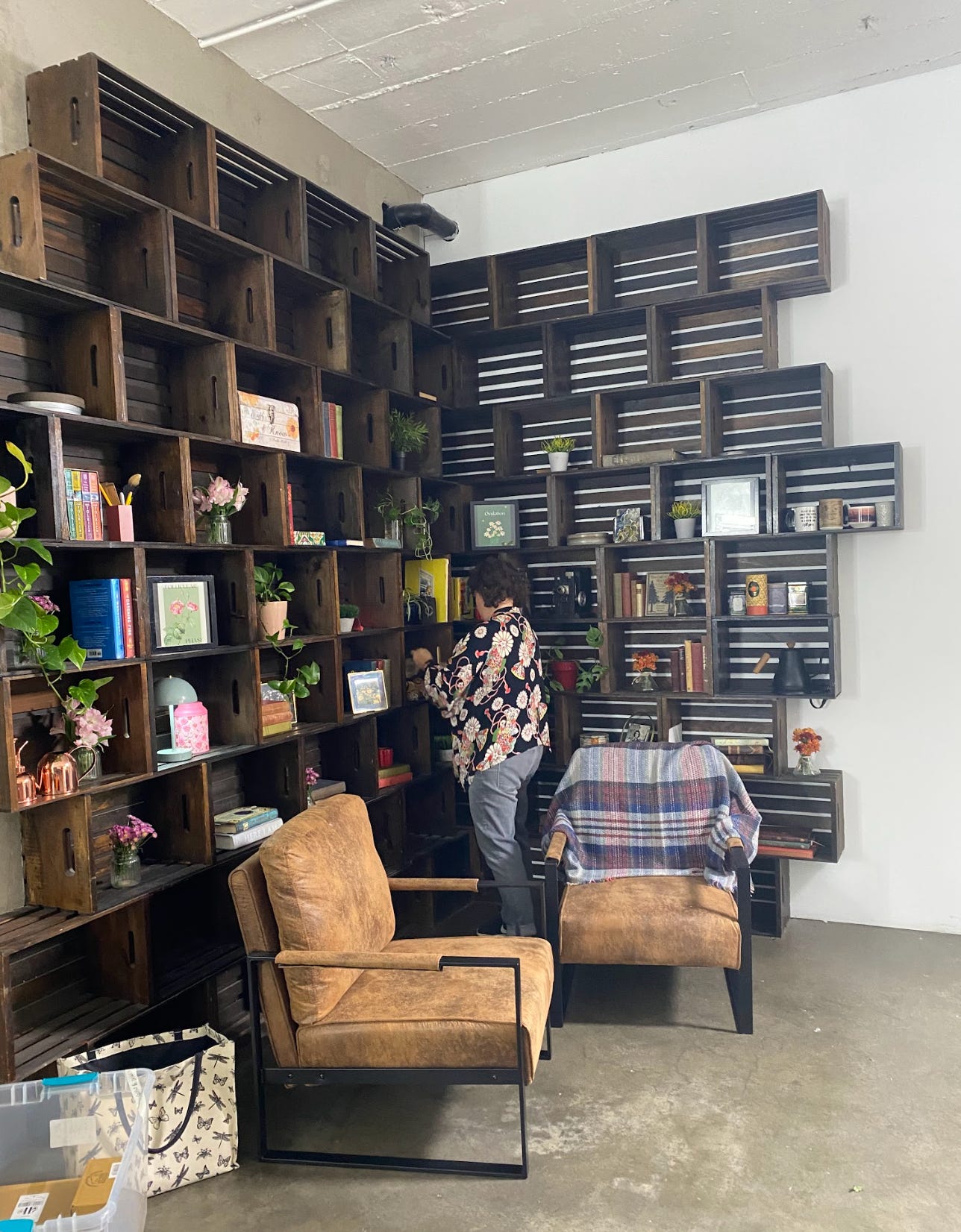
Similarly, I tapped one of my very favorite production designers, Kate English, to come and handle all props, set dressing, and costume advice. This woman has been an invaluable collaborator, and since she was moving out of LA, I scheduled the shoot to be certain we could work together one more time. Thank God I did. My original concept was a desk and a whiteboard, and she transformed the space, developing the setting to mirror each season my character is describing. Plus, frankly, when you find people you like working with, you do everything you can to keep working with them.
Mara agreed to come on as a performance consultant, which was huge because typically the director gives the notes. I could not watch my own performance, and since we were filming a twenty-five-minute monologue in one day, there simply was not time to watch playback for each take. Also, I know that I will bring as much as I think I am capable, but I needed a trained eye to identify if I needed to stop doing something, do more of something else, or just try something else.
I brought on a 1st Assistant Director, but unfortunately, that person had to back out. Thankfully, I found another woman in time, Anneka Keller. I am eternally grateful she said yes to this project only a few days out. The 1st AD plays a vital role on any production because they keep the crew organized and going in the right direction. But on this set, she was even more important because the director, who is supposed to be the principal leader, was also the talent. She knew she had her work cut out for her, but she locked in, and I immediately felt at ease knowing she would be at the helm.
I decided, early on, to bring as many females onto this project as possible. I wanted female energy in the room, both because I wanted them to be blessed and strengthened in their own journeys, but also because if I was going to vulnerably go all out in a deeply female topic, I wanted to feel safe among sisters. Our 1st Assistant Camera Operator was also female (Rachel Franklin), and then I went on the hunt for a female sound person. I couldn’t find one. Sound operation on set tends to be a male occupation, so I accepted it and hired someone named North Chen. When I met North on set and realized she was a woman, I knew the female forces were with me. Most especially true with the fabulous Kaylie O’Connor taking BTS.
We did have men on set: I’ve worked with Mark Trinkle as Script Supervisor before, and I knew his attention to detail between the script and the shot list would save us from missing anything. Between Mark and Anneka, I knew I could relax and focus on my character. Caleb Monroe, the incredible individual, stepped up to be a Production Assistant, and through him, I was connected with our makeup artist, Tyson Fountain. Tyson was incredible. I’ve had makeup done on me before, but never as the lead. Sitting in a chair with an artist of such accomplishments was humbling. I was a bit starstruck. When he asked how I felt about fake lashes, I knew we were going to be friends. Tyson took this sassy, mildly unhinged scientist on the page and turned her into a jaw-dropping diva. I cannot thank him enough.
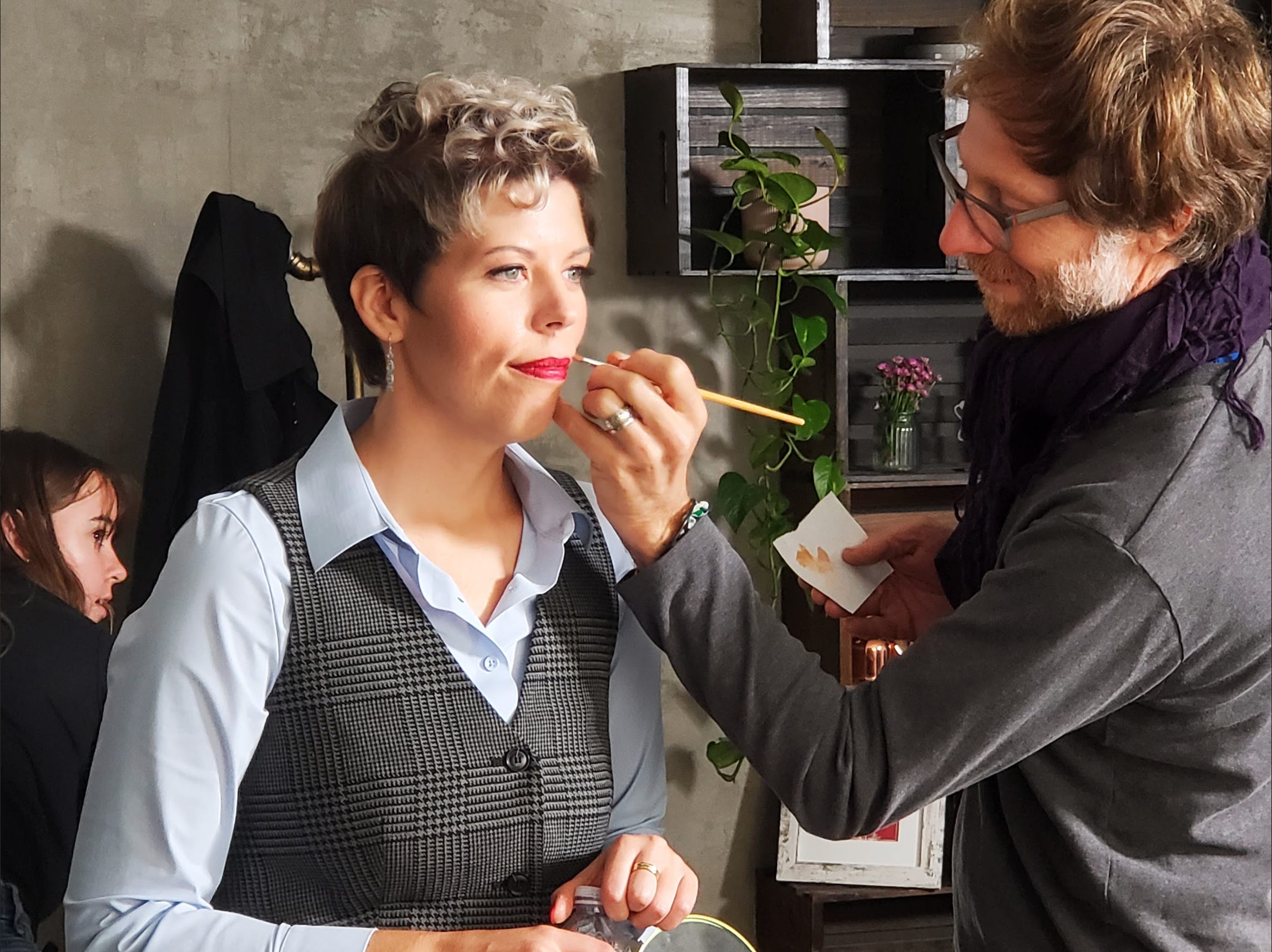
DIRECTING
As I explained above, all the crew decisions I made to support me as a director, I want to address here why I did not simply ask someone else to direct this project. I could have focused explicitly on the acting, and it would have made my life simpler, wouldn’t it?
No. It wouldn’t.
The director is the head of the project. She casts the vision. She holds all the pieces in her brain. She knows the tone. She sets the atmosphere on set. She gets to make arbitrary changes. She has final veto power (except for the producer). In spiritual terms, she carries the authority and headship over the project. She owns it. It is her responsibility if it succeeds or fails, and it is her responsibility to make the choices and sacrifices to help the project succeed.
I knew what this project was. I knew the purpose behind it. I had spent seven years cooking in it, and then offered up my very flesh to ensoul it. I financed it. I chose the department heads for it. I knew what it should not be, and what it should be. To give the project over to someone else to direct would have been like handing off a baby in utero to an adoptive parent: infant abandonment for the sake of virtue-signaling (see how humble I am by choosing not to be in charge?). Bringing in a new head over the project would have caused a direct conflict with the direction and vision of this piece. Film sets are a monarchy, not a democracy. The wise queen will listen to all input, trust her advisors, and then build the city.
If I had not had a strong vision for the project, if I had only an idea but knew someone else could bring more to the project by taking it over, and if I was not a strong enough director, I would have relinquished the directing hat to someone else. As it is, being a director is about having a clear vision, finding the best people for the project, and then allowing them to do their job. It’s not about being perfect and knowing everything any more than being a parent is about being perfect and knowing everything. The more you know, the better, certainly.
Yet humility is vital in every creative endeavor. This is why I specifically found a Script Supervisor, 1st Assistant Director, Director of Photography, Production Designer, and a Performance Consultant, who all knew what they were doing so I could get out of the way and go sit in the makeup chair. On set, when you’re working with a team of people who know what they’re doing, the project is a machine of its own, and the director comes in for performance notes.
When you have been entrusted with a concept, you must have the courage, the boldness, the humility, and the wisdom to carry it through to completion. I knew no one else would care for this project like I would, and so I kept her, inviting in the village to help me raise her.
ON SET
Arriving at the set, my stomach hit the back of my spine. It was that same sinking feeling you get at the start of a roller coaster ride. You know the first moments will be gut-wrenching terror as your body understands you’re about to die, hit the ground. SPLAT … and then you’re whizzing around corners, taking turns, and having the time of your life.
I knew the set would be fine. I had an Emmy winning makeup artist, a brilliant DP, a solid schedule, I knew my lines cold … everything was set up for success. My main concern was my performance. Would it be good enough? Would someone else have been better? Would I flop? Obviously, you can’t think about these things while you’re acting, so I pushed them from my mind with a, “Oh well, too late now. You better be good,” and sat still while Tyson applied the lashes and Kate dressed the set.
They set up for the first shot, and I delivered the first few pages of my monologue, the whole room watching me. This is the first time in my life that has ever happened — all the room watching with a camera on me. When I finished, I felt the energy in the room shift. When I saw the dazed relief on my 1st AD’s face, I realized what it was:
“Oh … she knows her lines … we’re gonna be fine.”
Pure victory.
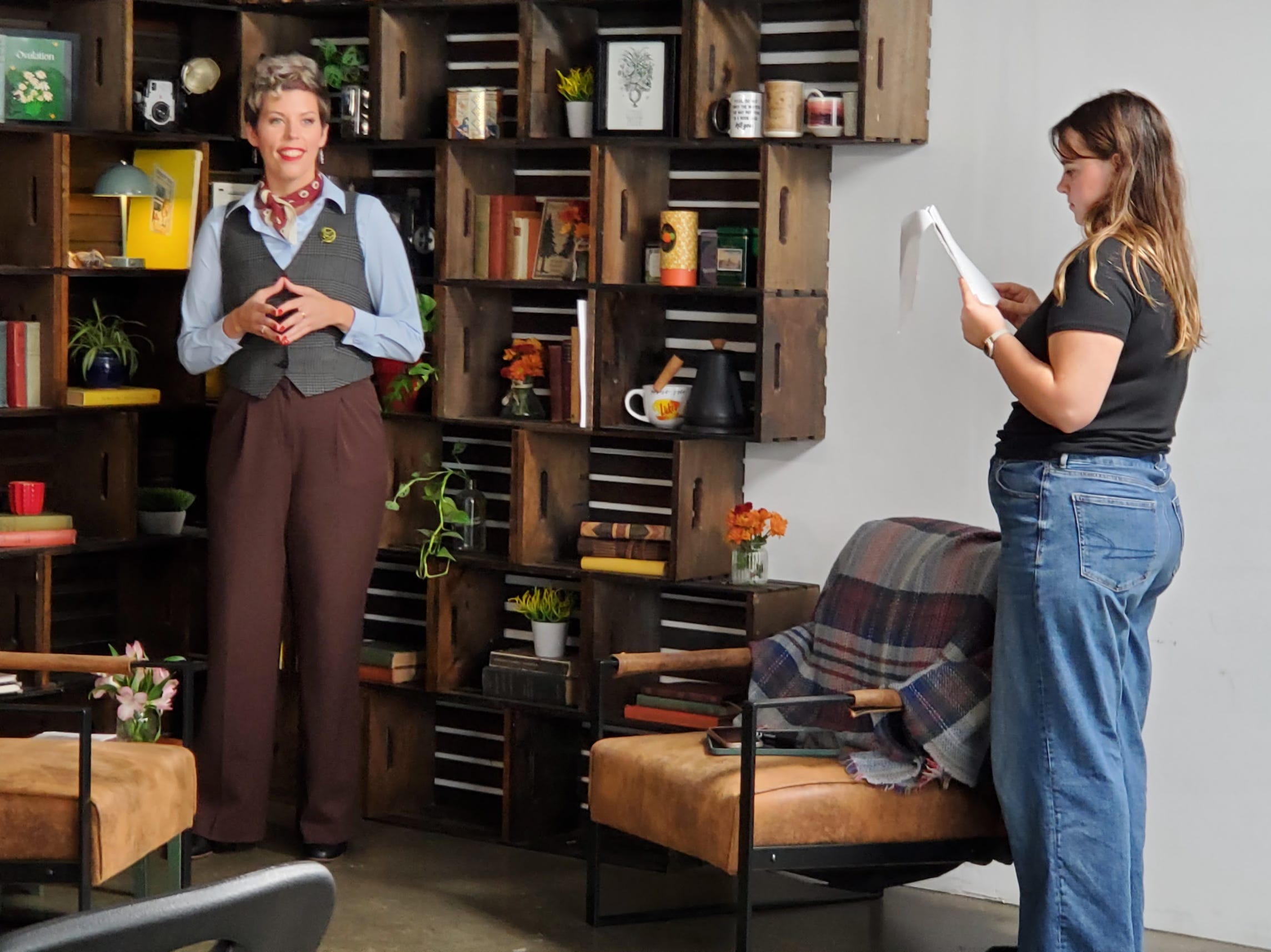
I leaned into the performance, Mara gave me notes, and for the first couple of hours, I held my breath: “Is this happening? Am I actually doing okay?” Eventually, it dawned on me that I was doing well … exceptionally well. I had it. Mara confirmed this by telling me that this was the best she had ever seen me. Wind in my sails.
That joy, that exhilaration of competence, of excellence, carried me for hours as I gave it all I had. Then, eventually, my body was winded, and I found myself privately inquiring, “Wait, how many more shots do we have?” With roughly two hours to go, I braced myself and dug in. I started dropping lines because my brain was running out of steam. My team was so patient to hang in there with me as I finally got the full takes we needed. I ate food in between setups, desperate to fuel my brain with calories to help serve the line recall. This was an entirely different experience, and I gained a whole new respect for what actors do: twelve-hour days where you have to be fully on, your mind locked in, and your emotions dialed. It’s a test of endurance. I’m sure the more you do it, the more stamina you build, but if I hadn’t spent two months drilling those lines, reworking the performance, I would have flailed on the day.
Thanks to our incredible 1st AD and everyone’s focused work, we got ALL the shots we needed, and were packed up and out of there by the time the booking expired.
That night, driving home alone in my car, it was like a dam of tension broke. I have lived in Los Angeles for over three years at this point: working hard, teaching myself new skills, and facing the things that scare me most. I realized that staring in my own project was the thing I had been most afraid of and uncertain I could achieve because there is nowhere to hide. All of you is on the line. You can’t fake it. Either you have it, and you did the iceberg’s worth of work beneath the surface, or you don’t. And I had done it.
Driving through the streets of LA late that night, a broad smile broke across my face. Nothing can scare me now.
DISTRIBUTION
I know, I know:
“So, where can we watch this, Shayla? I want to hear about hormones and see you act your precious little heart out!”
Patience, my dears. Patience. Good things come to those who wait.
Women’s Health Month is every May, and in honor of educating the world about female bodies, with a few laughs and hopefully some meme-worthy moments, I will release “The Hormone Games” episodically on my social media in May 2026. When the month is over, I will provide a YouTube link to the entire video, hopefully so some health teachers can educate their students, middle school girls can get some advice, and boyfriends can understand their girlfriends better.
My love to you all. Happy Holidays and Merry Christmas.
Adventure Awaits,
~ S. C. Durbois
P.S. Keep an eye out for my latest book, an anthology of the very best short stories published in this newsletter. Scheduled for release in early 2026.
S. C. Durbois Newsletter
1st Saturday every month: a new original short story.
3rd Saturday every month: a writerly check-in with updates.
4th Saturday every month: a new original poem. Subscriber access only.
Truly awesome, Shayla! I can't wait to see this.